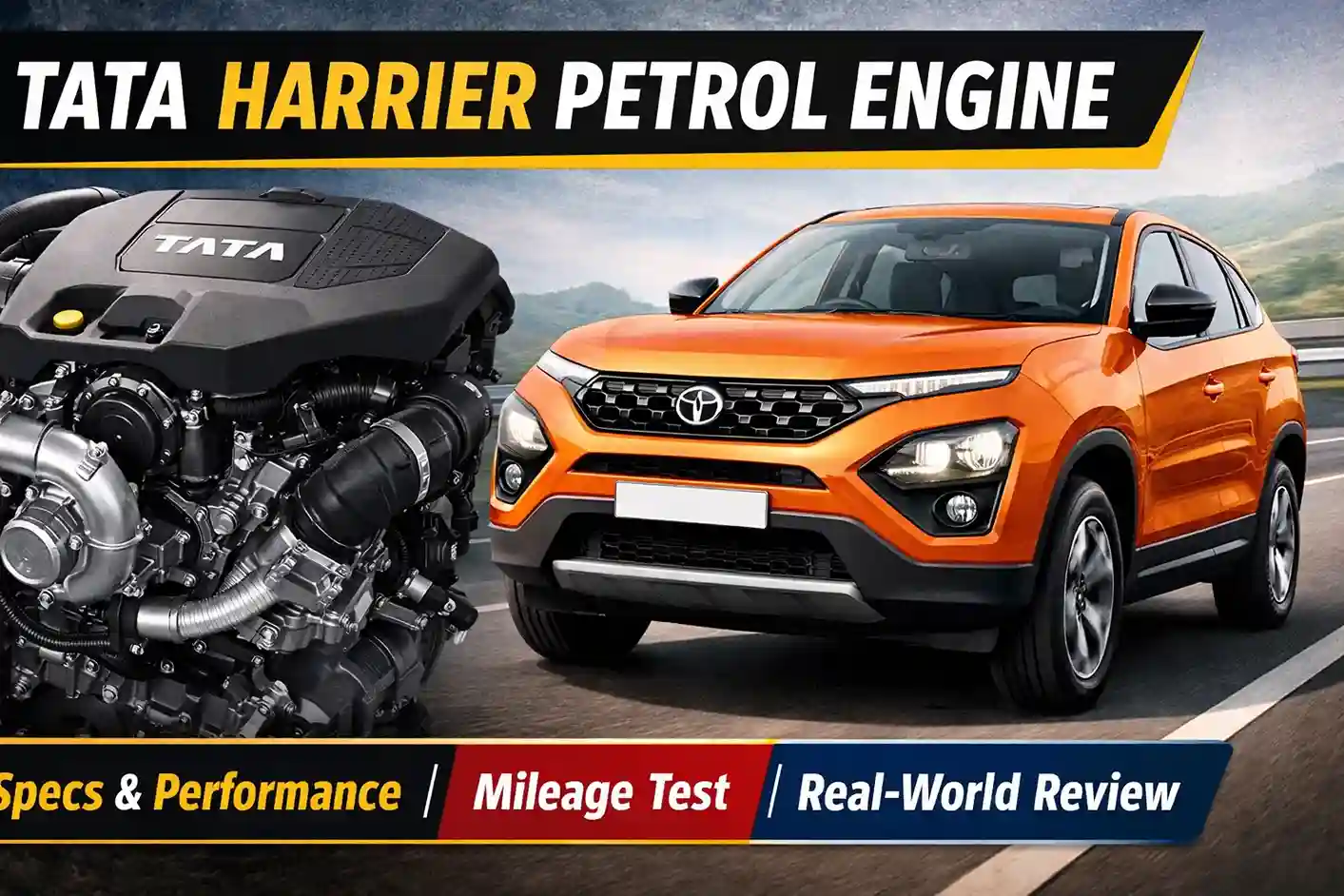
Introduction — Why the Tata Harrier Petrol Engine Matters
If you and I were sitting over chai talking cars, the first thing I’d say is this: the tata harrier petrol engine is a big deal for Harrier fans in India. For years, the Harrier was only a diesel SUV — powerful and rugged but thirsty and not always smooth in city traffic.
Now Tata has finally given this rugged road warrior a petrol heart. In this post, I’ll break down what the tata harrier petrol engine is all about: real specs, how it performs on real roads, what mileage you can expect, and whether it’s worth your hard-earned rupees.
Quick Overview: Tata Harrier Petrol Engine
Under the hood of the petrol Harrier sits a 1.5-litre turbocharged petrol engine from Tata’s Hyperion family. It’s a four-cylinder, direct-injection motor tuned to offer a balance of power and refinement. Tata has positioned this petrol motor to give drivers quieter, smoother performance compared with the older diesel mill while still keeping SUV grunt.
Unlike the diesel Harrier’s 2.0-litre engine with heavy torque, the tata harrier petrol engine is lighter and more responsive in city traffic. You still get strong mid-range performance, but without the diesel rumble.
Power, Torque & Performance Figures
Let’s talk numbers — the stuff you actually feel.
- The tata harrier petrol engine makes around 168–170 hp at roughly 5,000 rpm.
- Peak torque sits at about 280 Nm in the 2,000–3,500 rpm range.
- You get a choice of a 6-speed manual or a smooth 6-speed automatic (most likely a torque-converter unit).
On city roads, the petrol Harrier feels eager off the line — throttle response is quicker, and there’s less lag than a diesel. On the highway, roll-on power is confident enough for overtakes and cruising without constant gear juggling.
Where the tata harrier petrol engine really shines is in everyday driving: no diesel clatter, easier cold starts, and that smooth surge when you ask for pace.
Real-World Mileage & Efficiency
Fuel economy is where petrol Harrier owners will be watching closely.
Tata hasn’t officially released detailed ARAI figures yet, but early data and real-world chatter suggest modest but respectable numbers:
- Expect around 12–14 km/l in mixed driving conditions.
- In the city, the tata harrier petrol engine will feel refined but will sip more fuel than a small hatchback. Highway runs on consistent speeds will stretch efficiency a bit more.
This isn’t a mileage champion — diesels still win here — but for many drivers who love refinement and quiet cabin vibes, the trade-off is worth it.
Drive Quality & Handling With Petrol Engine
The tata harrier petrol engine doesn’t change Harrier’s strong foundations: suspension is planted and composed, steering is weighty in a good way, and body control feels confident. Around town, the engine’s refinement really comes through — fewer vibrations, less harshness, and a calmer feel at low speeds.
In traffic, the smoothness of this petrol unit — combined with easy gear shifts — makes daily commutes less tiring. NVH levels are lower than the diesel Harrier, so long drives feel less grating. The Economic Times
Comfort & Cabin Experience
The Harrier has always felt grown-up inside, and that doesn’t change with the petrol variant. Big seats, good headroom, and a roomy feel make it easy to live with. Ride comfort is plush over broken roads, and the tata harrier petrol engine’s refinement just adds to the overall serenity.
You’ll still get a large touchscreen, digital driver display, and modern tech — the petrol version doesn’t skimp on features.
Competitor Comparison
How does the petrol Harrier stack up against rivals?
- Hyundai Creta Petrol — lighter and more fuel-efficient, but smaller and softer on power.
- Kia Seltos Petrol — similar class rival with refined petrol options, but Harrier feels bigger and more rugged.
- MG Astor / Toyota Urban Cruiser Hyryder Petrol — competent petrol SUVs, often more tech-focused, but Harrier brings that SUV heft and road presence.
Against these, the tata harrier petrol engine offers a sweet blend of torque and smoothness with SUV-sized charisma.
Pros & Cons of the Petrol Engine in Harrier
Pros
- Quiet, refined engine feel.
- Good power and usable torque.
- Better urban friendliness compared with diesel.
- Smooth highway manners.
Cons
- Mileage isn’t class-leading.
- Torque is healthy but less than diesel.
- Petrol running costs remain higher than diesel.
Who Should Buy It?
If you’re mainly a city commuter who loves long weekend drives, the tata harrier petrol engine makes sense. It’s smooth, refined, and relaxed on highways.
Small families and SUV lovers who want presence and comfort — without diesel noise — will appreciate it most.
For heavy daily highway duties or lots of mileage, the diesel may still edge ahead on running costs.
Final Verdict
To wrap it up: the tata harrier petrol engine gives the Harrier a well-rounded, refined personality. It’s not just another petrol SUV; it’s a tactile blend of power, smoothness, and everyday usability.
If you want an SUV that’s comfy, confident, and easy to live with — especially in urban traffic — this petrol Harrier is worth serious consideration. It adds a fresh option in a popular segment without losing the Harrier’s core strengths.